Parent & Coach Guide
50% of young athletes quit
by age 13
70% cite lack of fun as
the primary reason
#1 factor in dropout is
pressure from adults
Your child used to jump out of the car at training. Now they need reminding three times to put their kit on.
That shift — quiet, gradual, easy to miss — is one of the most important signals in youth sport.
Motivation in young athletes rarely disappears overnight. It erodes slowly, through a combination of pressure, fatigue, boredom, and a feeling that nobody notices their effort. And by the time most parents and coaches realise what is happening, the athlete has already made a private decision to leave.
The athletes who feel most supported — by both coaches and parents — are significantly less likely to quit. The environment around an athlete matters as much as the talent inside them.
This guide covers the real warning signs, the root causes, and the practical steps parents and coaches can take — before motivation disappears completely.
01 — Warning signs
What losing motivation actually looks like
Most parents wait for their child to say "I don't want to play anymore." But by then, the decision has usually already been made internally. Motivation loss shows up in behaviour long before it shows up in words.
There are two levels to watch for:
Early warning Excuses before training Mild but repeated complaints — stomach aches, tiredness, forgetting kit. Not always genuine illness. | Early warning Going quiet after games Previously talkative athletes stop discussing training or matches. Enthusiasm in conversation drops noticeably. |
Early warning Effort declining at training Not injury-related. The athlete is physically present but mentally checked out. Coaches notice this first. | Early warning Comparing to teammates negatively "Everyone else is better than me." Frequent downward comparisons signal a confidence crisis developing. |
Serious signal Asking to miss sessions Moving from reluctance to active requests to skip training. This is a clear escalation that needs immediate attention. | Serious signal Visible anxiety before matches Stomach problems, sleep disruption, crying, or extreme mood changes before competition — not normal nerves. |
Serious signal Saying "I'm not good enough" When an athlete begins labelling themselves rather than their performance, confidence has broken down significantly. | Serious signal Asking to quit entirely The final stage. Often said during high stress — but even when said casually, it should always be taken seriously. |
02 — Root causes
The real reasons motivation disappears
Motivation loss is rarely about the sport itself. It is almost always about the environment around it.
Burnout from overtraining: Too many sessions, too many competitions, not enough recovery time. Young bodies and minds have limits. When training volume exceeds what a child can absorb, performance drops — and so does motivation to continue.
Pressure from adults — parents and coaches: This is the single biggest driver of dropout in youth sport. When a child feels they are playing for their parent's pride or a coach's approval rather than for themselves, the internal motivation that makes sport sustainable vanishes.
Boredom from repetitive training: Especially common in athletes aged 10–14. When training lacks variety, challenge, or clear progression, athletes lose the sense that they are growing. Stagnation feels like failure.
Invisible progress: Young athletes need to see that their effort is producing results. When improvement goes untracked and unacknowledged, athletes assume they are not improving — even when they are.
Loss of social connection: For many young athletes, especially girls, sport is primarily about belonging. When team dynamics break down, friendships fade, or an athlete feels isolated, the motivation to attend disappears — even if they still enjoy the sport itself.
Fear of failure and public mistakes: When the environment punishes errors more than it rewards effort, athletes become risk-averse. They start to play not to win, but to avoid losing — and that fear is exhausting over time.
03 — What parents can do
How parents can rebuild motivation
The parent's role in sport motivation is often underestimated — and often misunderstood. The most powerful thing a parent can do is create emotional safety around sport. That means an athlete knows they will be loved and valued whether they win, lose, play brilliantly, or have the worst game of their life.
Avoid saying "You didn't try hard enough today." | Try instead "I loved watching you play. How did you feel out there?" |
Avoid saying "Why did you miss that? You've practised it a hundred times." | Try instead "Mistakes are part of learning. What do you want to work on next?" |
Avoid saying "Your teammate scored twice — why can't you do that?" | Try instead "You're improving every week. I noticed how much better your positioning is." |
✓ What parents should do
Daily and weekly habits that protect motivation
Ask about enjoyment, not just results — "Did you enjoy training today?"
Notice and name specific improvements, not just big moments
Give the car ride home a 10-minute "decompression" — no feedback, just presence
Ask the coach privately about what they observe — build a shared picture
Let your child know it is always safe to talk to you — about pressure, fear, or wanting to stop
Track attendance and commitment together — make progress visible and celebrated
✗ What parents should stop
Coaching from the sideline during matches — let the coach coach
Replaying every mistake on the drive home — process before analysing
Comparing your child to teammates, siblings, or "how you were at their age"
Overloading with training — children need downtime as much as practice
Making sport feel like an obligation rather than a choice
Dismissing early warning signs as "just a phase" without a real conversation
04 — What coaches can do
How coaches can reignite motivation
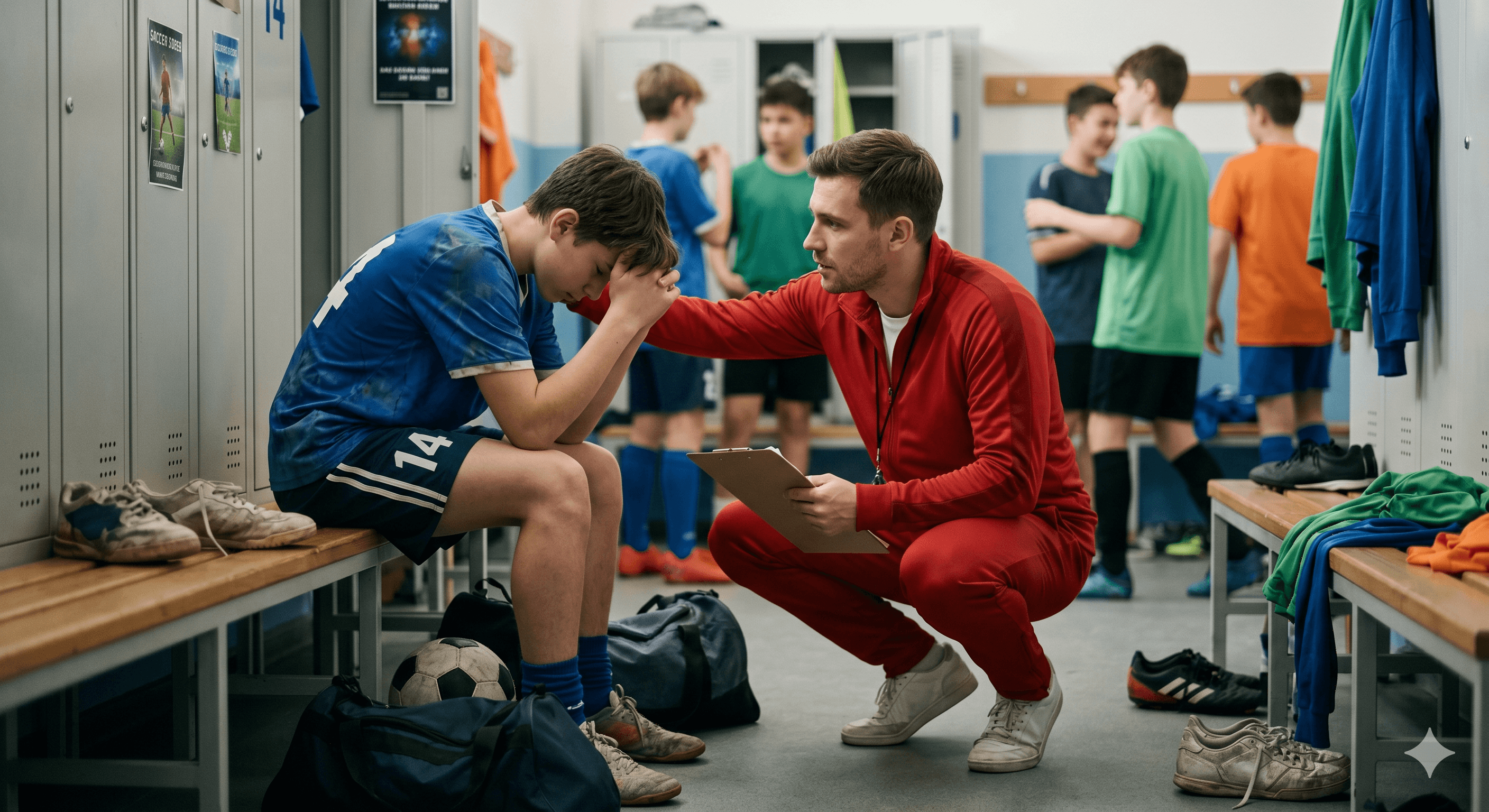
A great coach is often the person who catches a motivational crisis before a parent does. Athletes frequently show early signs at training that they hide at home — reduced effort, disengagement, avoiding challenge, going quiet.
The coach who notices and responds early can change the trajectory of an athlete's entire relationship with sport.
▲At training
Session-level interventions that rebuild engagement
Session-level interventions that rebuild engagement
Vary training structure — new drills, small-sided games, challenges with clear goals
Give struggling athletes specific, achievable roles where they can succeed visibly
Name effort publicly, not just talent — "I saw how hard you worked on that today"
Have a private 5-minute check-in with athletes showing early warning signs
Create a training culture where mistakes are expected, not punished
★Over time
Longer-term habits that build lasting engagement
Track attendance and consistency — not to punish absence, but to notice patterns early
Share progress updates with parents regularly — build a joint support system
Set individual goals with each athlete — not just team goals
Celebrate improvement trends, not just match results
Use technology to make progress visible — athletes who can see improvement stay motivated
When coaches and parents share information — about attendance, effort, mood, and progress — they create a support system the athlete can actually feel. That feeling of being seen and supported is one of the most powerful motivators in youth sport.
05 — Technology's role
How visibility prevents dropout
One of the most underrated tools in motivation is simple: making progress visible.
Young athletes are deeply motivated by seeing their own improvement. When they can track their attendance, watch their consistency build, and see their effort reflected in data — something shifts. They become invested in their own progress in a way that no pep talk can replicate.
Platforms like Athlefy give coaches the ability to monitor attendance trends, flag declining engagement, share progress with parents, and create the kind of shared accountability that keeps athletes committed. Not through pressure — but through visibility.
A child is far more likely to show up consistently when:
Their effort is tracked and acknowledged
Attendance and consistency data gives coaches and parents something real to celebrate — not just goals scored or matches won.
Their parents are informed and engaged
When parents can see training data, they ask better questions at home and offer more specific, meaningful support.
Their coach notices and responds to patterns
A coach who spots three missed sessions and follows up — not with punishment, but with genuine curiosity — changes everything for a struggling athlete.
Motivation loss in youth sport is not inevitable. It is preventable — with the right environment, the right conversations, and the right people paying attention.
The athletes who stay in sport long enough to reach their potential are rarely the most talented ones in the group. They are the ones who felt most supported along the way.
That support starts with noticing. And it deepens every time a parent, a coach, or a system says: we see your effort, and it matters.
Built for the coaches and parents who pay attention
Athlefy helps coaches track attendance, monitor effort, and share progress with parents — so no athlete's motivation crisis goes unnoticed.